
The 10 Most Common Mistakes When Buying Property in Mallorca (2026)
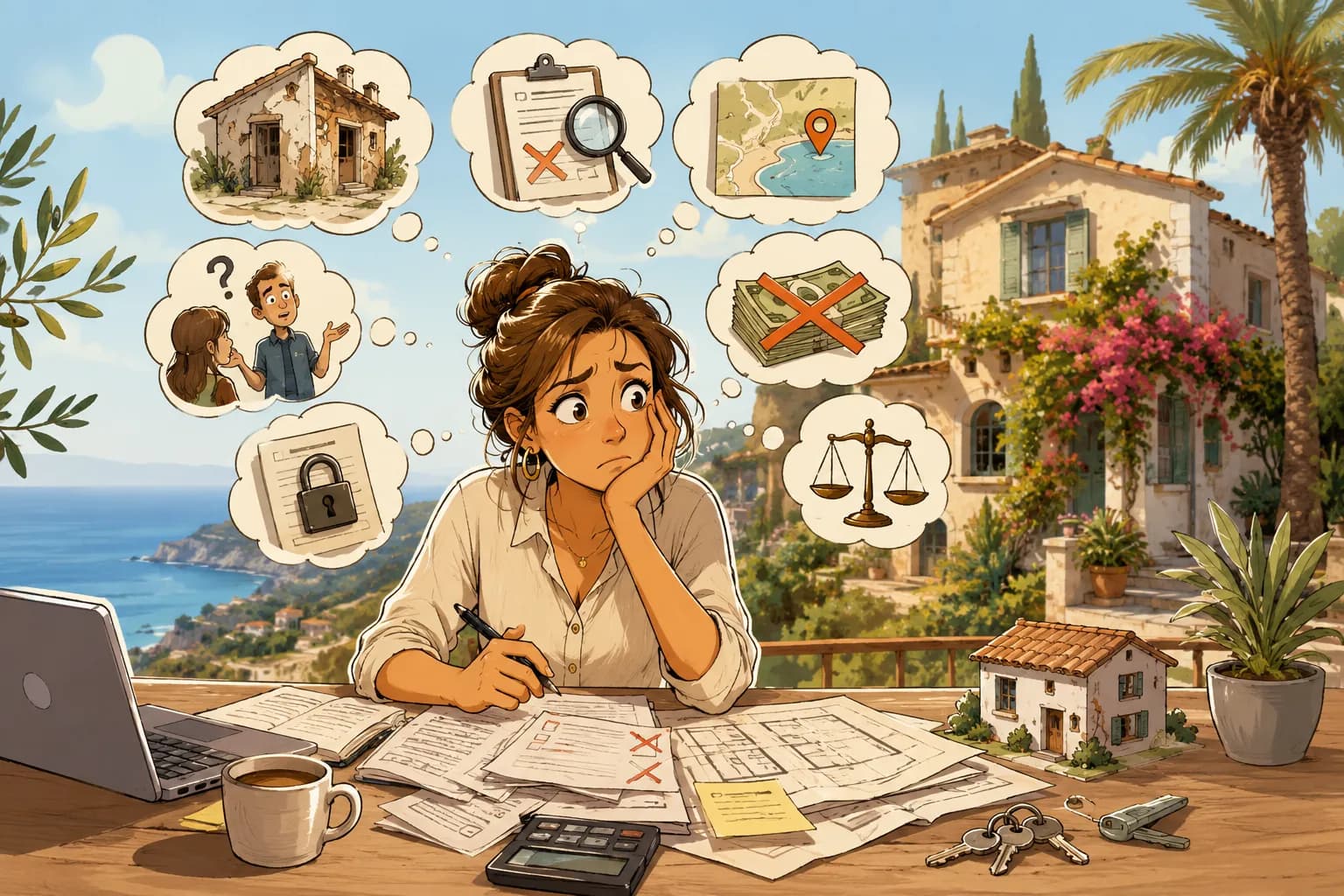
Most of the expensive problems international buyers run into on the island do not come from bad luck. They come from a short list of avoidable mistakes buying property in Mallorca that repeat themselves deal after deal, whether you are moving from Germany, the Netherlands, Scandinavia, the United States, or the UK. British buyers, who make up one of the largest groups of foreign owners here, have extra reasons to pay attention since Brexit, and we flag those along the way. The market moves quickly, much of it runs in a language and a legal system that is not your own, and the person selling you the home is rarely the person protecting your interests.
This article walks through the ten mistakes we see most often, what each one really costs, and where to get the right checks before you commit.
In this article you will find: the ten most common mistakes buyers make in Mallorca, what non-EU buyers (and UK buyers especially, after Brexit) need to watch, and how to avoid the traps before you sign anything.
Why buying in Mallorca catches buyers off guard
The rules are stricter for non-EU buyers
If you are not an EU citizen, and that now includes British buyers since Brexit, a few things change quietly: how long you can stay in your own holiday home, how much tax you pay as a non-resident, and how some of the paperwork is treated. Buyers who assume the old, easier rules still apply get caught out. Because UK buyers are such a large group here, and the change was recent, they are the ones most often surprised by it.
The agent is not on your side of the table
The estate agent is paid by the seller and paid when the deal closes. That does not make them dishonest, but their job is to complete the sale, not to check whether the purchase is safe for you. That gap is where most of the following mistakes live.
Buying property in Mallorca?
Expert legal guidance for international buyers.
The 10 most common mistakes when buying property in Mallorca
1. Assuming you can stay as long as you like
A common mistake among non-EU buyers is purchasing a holiday home while assuming they can spend as long there as they want. As a non-EU visitor, and that now includes UK citizens after Brexit, you are limited to 90 days in any 180 under the Schengen rule, unless you obtain residency. Buyers who plan a half-the-year lifestyle without checking this end up with a home they cannot legally use the way they intended.
2. Not hiring an independent lawyer
Many buyers assume the notary or the agent covers the legal side. Neither acts for you specifically. An independent lawyer reviews the contract, runs the checks, and flags risk before you are committed, which is exactly when it still matters.
3. Skipping due diligence
Buyers fall for the property and forget to check what they are actually buying. Outstanding debts, unpaid community fees, planning problems, and charges on the property all pass to the new owner if they are not caught first. A survey of the building's condition belongs here too, especially with older and rural homes.
4. Underestimating the contrato de arras
The arras is the deposit contract, and it is far more binding than most buyers expect. Sign it, change your mind, and you can lose your deposit, often ten percent of the price. It should never be signed before someone has reviewed the property and the terms on your behalf.
5. Underestimating the tax bill as a non-EU buyer
The purchase price is not the final figure. Transfer tax, notary and registry fees, and legal costs sit on top, and they are significant in the Balearics. On top of that, if you are a non-EU owner, including UK owners since Brexit, your non-resident tax position is less favourable, and rental income is taxed differently than it is for EU residents. Budgeting only for the asking price is how buyers get an unwelcome surprise.
6. Ignoring urban planning and licences
A beautiful house can carry an illegal extension, a pool without a licence, or a rustic-land restriction that limits what you can build or rent. These issues are common in Mallorca and expensive to resolve after purchase. They need to be checked against the town hall and the planning records before you buy, not after.
7. Overlooking currency exposure
If you earn or hold your money in another currency, pounds, dollars, kronor, you are buying in euros with money that is not. Between agreeing a price and completing, the exchange rate can move enough to add thousands to the real cost. Buyers who leave transfers to the last minute, with no plan for the rate, pay for it.
8. Failing to check the Land Registry
The Land Registry (Registro de la Propiedad) confirms who really owns the property, what it consists of, and what debts or charges sit against it. Relying on what the seller or the listing says, rather than the registry itself, is how buyers end up with claims they never agreed to take on.
9. Not understanding the deed (escritura)
The escritura is signed at the notary, in Spanish, on completion day. Buyers who have not had the deed and its terms explained beforehand are signing something they do not fully understand at the least reversible moment of the whole process. Everything should be clear well before you reach the notary's office.
10. Treating the estate agent as legal counsel
The most common mistake of all is trusting the agent for advice that should come from your own lawyer. The agent wants the sale to close. Your lawyer wants the sale to be safe for you. Those are not the same job.
| Notary (notario) | Independent lawyer (abogado) | |
|---|---|---|
| Acts for | The transaction, formally neutral | You, and only you |
| Checks the price and terms are fair | No | Yes |
| Reviews the contract for your risk | No | Yes |
| Runs due diligence (debts, licences, registry) | Limited | Yes |
| Advises on your tax exposure | No | Yes |
How to protect yourself before you sign
Get independent advice early
The single best move is to bring in your own lawyer before you sign anything, ideally before the arras. Early advice is cheap. Fixing a bad purchase is not.
Put the right checks in place
Before you commit, make sure the following are done:
- Land Registry and ownership confirmed
- Debts, charges, and community fees checked
- Planning status and licences verified with the town hall
- Contract and arras reviewed on your behalf
- Tax position and full costs budgeted, not just the price
- A plan for the currency transfer, not a last-minute rush
A question about your situation in Mallorca?
Personal response within one business day.
If any of these steps raises a question, that is the point to talk to us rather than press on and hope. You can reach us any time through our contact page.
Frequently asked questions
- Do I really need a lawyer if there is already a notary?
- Yes. The notary formalises the deed but does not act for you or check whether the purchase is safe. An independent lawyer represents your interests specifically.
- Can I buy property in Mallorca without an NIE?
- No. The NIE, the foreigner identification number, is required to complete a purchase in Spain. Arrange it early to avoid delays.
- How long can I stay in my Mallorca home as a non-EU owner?
- Owning property does not grant residency. As a non-EU visitor, which now includes UK citizens, you are limited to 90 days in any 180, unless you obtain a residency permit.
- Is the contrato de arras binding?
- Yes. It is a deposit contract with real financial consequences if you withdraw. Have it reviewed before you sign.
How KJ Can Help You
Buying in Mallorca is safe when the right checks happen at the right time, and risky when they are skipped under pressure. Nearly every mistake on this list is avoidable with independent advice taken early, before the deposit rather than after completion, and that is doubly true for non-EU buyers, UK owners included, now that the rules have shifted.
At KJ Legal Plus we act only for you, running the due diligence, reviewing the contracts, and making sure you understand exactly what you are signing.
Buying property in Mallorca? Talk to us before you sign anything, through our contact page.